

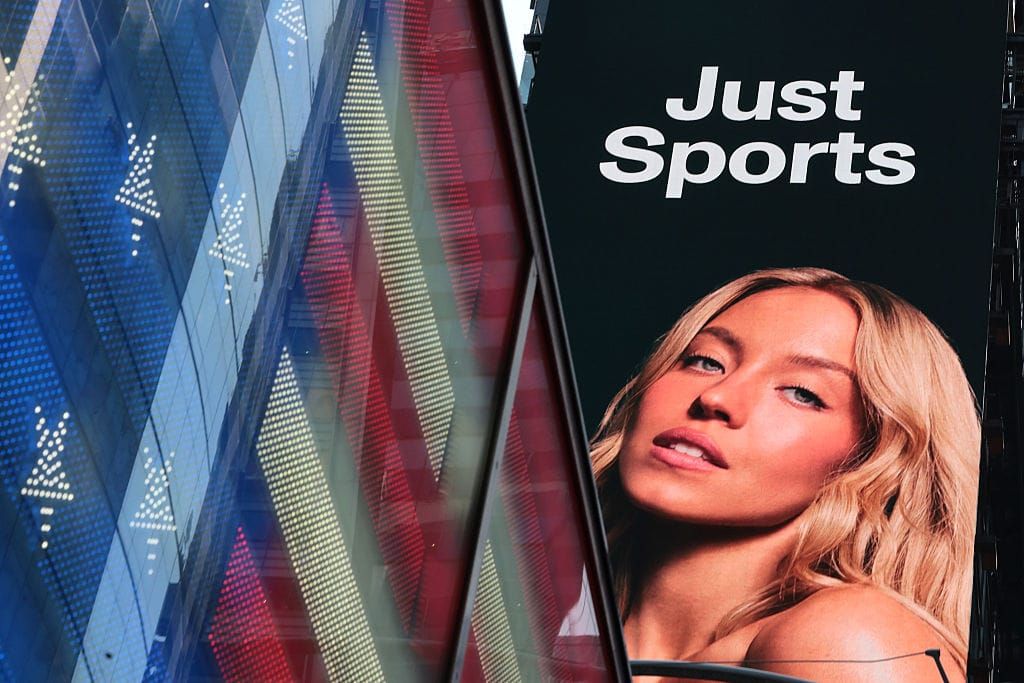
Sydney Sweeney has once again appeared in a campaign, and once again, the internet has thoughts. But in the age of outrage marketing, when controversy can generate millions of views overnight, what happens to the conversation once everyone stops looking?
Using emotion to sell something is nothing new. Brands have been tugging at heartstrings, pushing boundaries, and deliberately ruffling feathers since long before TikTok was even a twinkle in the internet’s eye.
Who could forget PETA’s notorious “I’d Rather Go Naked Than Wear Fur” campaign of the 90s or Calvin Klein’s “Nothing Gets Between Me And My Calvin's” featuring a then 15-year-old Brooke Shields? Both campaigns generated controversy. Both got people talking.
And talk sells.
Decades later, the formula hasn’t changed all that much. What has changed is what happens after the ad goes live.
Sydney Sweeney’s recent collaboration with sports-trading platform NOVIG is a particularly useful example. The ad is about as contentious as you can imagine, featuring Sydney posing with various sports equipment and…well, nothing else. The tag line? “Just sports.” Almost immediately, the internet began debating whether the campaign was objectifying, anti-feminist, deliberately provocative, or simply another example of sex being used to sell a product.
But the real question isn’t whether the ad is controversial.
It obviously is.
The real question is why a conversation supposedly about sports so quickly became another conversation about a woman’s body.
When Controversy Becomes the Product
“All publicity is good publicity.” The unofficial slogan of outrage marketing. The logic is simple: attention creates engagement. Engagement creates traffic. Traffic can create money.
And, through the rise in digital virtue signaling, the modern internet is exceptionally good at turning anger into attention.
One provocative image can become a reaction video, which becomes a TikTok stitch, which becomes an Instagram carousel, which becomes a Reddit thread, which becomes a headline, all with the aim of being the first to swing the axe, and suddenly the original advertisement is lost within hours.
Of course all this does is make the PR team’s job easier: it is free publicity. As pointed out in the New York Times, it is very likely that this is the first time you have heard of NOVIG. When beginning to write this article, I had to turn to Google to confirm what the company actually sells since the advert isn’t exactly clear. And this exactly confirms the brand’s intentions. They don’t care that people didn’t know who they were before. They would soon be in everyone’s search history.
But when women are at the center of that strategy, there is another cost.
Because while NOVIG may be the brand being discussed, Sweeney’s body becomes the vehicle through which that discussion happens. When the campaign is tied specifically to sports, it taps into a much older conversation about where women are expected to fit within sporting culture.
Are women the athletes?
Or are they the entertainment surrounding the athletes?
That distinction matters.
Women’s Sports Have Never Been “Just Sports”
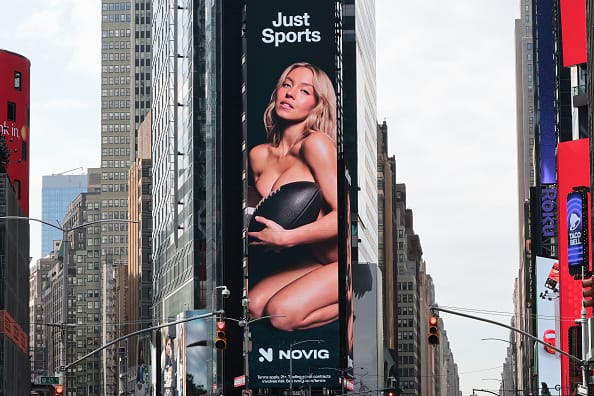
There is something particularly ironic about telling audiences NOVIG is no drama, no politics, “just sports”, while using a woman’s body as the centerpiece of the campaign.
So, the commodification of a woman’s body is not political? Interesting.
Women in sports have spent decades fighting to be recognized for what they actually do.
Run. Jump. Fight. Swim. Lift. Score. Win.
And yet, time and time again, conversations surrounding female athletes still have a remarkable tendency to wander away from their performance.
What are they wearing?
Are they attractive?
Are they feminine enough?
Are they too feminine?
Are they marketable?
Suddenly, athletic achievement becomes only one part of a mass scrutiny that male athletes are not always subjected to in the same way.
This is why the backlash surrounding the NOVIG campaign became bigger than Sydney Sweeney.
The criticism was not simply that an actress appeared in a provocative advertisement. Sex has been used in advertising approximately forever.
The discomfort comes from what the imagery represented within the context of sports: yet another instance in which a woman’s visual and sexual appeal appears to be more commercially useful than women’s athletic achievement itself.
And that conversation matters far more than whether one ad was in good taste.
The Internet Changed Backlash
Let’s be honest, the recipe for virality was perfect. An actress already infamous for her sexual identity plus an incendiary slogan plus a platform whose primary user base is straight men equals millions of views. It is the same basic formula used by brands for decades. Adverts aren’t becoming more controversial. The controversy is becoming more accessible.
PETA launched “I’d Rather Go Naked Than Wear Fur” before social media controlled the cultural conversation. The campaign was provocative, controversial, and eventually became deeply associated with the organization itself.
But controversy moved differently then.
Yes, the campaign's delivery was divisive but its reach was significantly more limited. If you were horrified by Pamela Anderson naked on your screen, there were very few ways of expressing your disapproval. Write a letter? Call a company? Hell, you could complain to someone sitting next to you.
What you could not do was pull out your phone, film a 60-second reaction, upload it to TikTok, receive 800,000 views, and wake up the next morning to discover your opinion had become a part of the news story.
Today, backlash is immediate, searchable, and shareable.
Anyone with an internet connection and a spare five minutes can put in their two cents, go viral, and suddenly a campaign that might once have generated a few days of newspaper coverage has seemingly consumed the entire internet.
But only for a week.
Outrage Has A Short Shelf Life
The internet can make something enormous remarkably quickly.
It can also forget about it by Thursday.
What would previously be a month’s worth of discourse has become half an hour’s worth of scrolling.
As quickly as it emerges, the flashpoint of controversy fades as another celebrity faux-pas takes its place. Another bad take. Another screenshot. Another person we are collectively supposed to be furious with before lunch.
Like clockwork, the content cycle moves on.
When a hugely nuanced topical debate can be distilled into a 2 minute TikTok info dump, it is very easy to think “got it”, get bored, and move on.
And that creates a problem when the controversy touches something that actually deserves sustained attention.
Because misogyny does not disappear when the trending topic does.
Neither does the sexualization of women in sports.
Neither does the scrutiny placed on female athletes’ bodies, clothes, personalities, relationships, or marketability.
The internet may spend a week locked in passionate debate because of one advertisement. But once the campaign stops generating engagement, the conversation surrounding the underlying issue often disappears with it.
The problem doesn't.
So What Happens to the Women Actually Playing?
Now, this is where the interesting conversation begins.
Female athletes have spent generations demanding that their accomplishments be treated as accomplishments rather than side notes to conversations about their appearance.
And in response to the NOVIG campaign, women across social media began offering their own definition of what “just sports” looks like.
Actual sports.
Women competing. Training. Falling. Winning. Breaking records. Pushing their bodies. Sharing what those bodies can accomplish, rather than how appealing they might look while doing it.
No nudity, no gimmicks, just pure performance.
Gymnast Gracie Kramer joined the response, writing:
“I don't know what Sydney Sweeney was doing, but this is what women in sport look like.”
A simple sentence, but it gets to the heart of why this particular controversy struck a nerve.
Women do not need to pass some sort of beauty contest to belong in sports.
They have nothing to prove.
They are already there.
The question is whether the culture surrounding sports is willing to give their achievements the same attention it so readily gives their bodies.
And that requires a much longer conversation than the internet is currently prepared to have.
Virality Will Fade. The Issue Won't.
It is very easy to interpret thousands of women pushing back against a campaign as evidence of progress. And, to some extent, it is. The fact that female athletes can speak for themselves, challenging the way they are depicted in media, matters.
That will always be a good thing.
But the uncomfortable truth is the momentum is already dying. Sydney has already regained the 200,000 followers she lost immediately after the campaign’s release within the past week and the TikTok news cycle has rumbled on.
A viral conversation is not necessarily a lasting one.
A lasting brand identity cannot be forged on manufacturing discourse for an easily distracted internet. Eventually, NOVIG’s campaign will become another piece of pop culture history. The reaction videos will stop appearing on For You pages, the headlines will slide down search results, and the entire thing will be lost in the ether of old discourse.
But women’s sports will still be here. Still be breaking records, winning championships, building audiences, demanding better investment, and pushing against a culture that has historically found it easier to market women’s bodies than their achievements.
That is the real price of controversy.
Outrage marketing can make an issue impossible to ignore for a moment without doing anything to ensure we keep paying attention once that moment passes.
So maybe the question isn’t whether Sydney Sweeney’s campaign worked.
If the goal was getting people to talk, clearly it did.
The better question is what we choose to keep talking about when the ad is no longer interesting.
Because controversy will come and go.
Women’s achievements shouldn’t.