

At some point, finding a person became a numbers problem. But I'm starting to think more options aren't making any of us better at dating.
I keep hearing that dating is a numbers game. Sure, my coupled friends say it’s “simple enough”: the more matches I make, the better my chances of securing love.
Something about the numbers-game theory is reassuring. It makes dating feel less personal.
If you've been single for a while, you don't have to wonder whether there is something fundamentally wrong with you. You just haven't met enough people yet. If you've had a string of terrible dates, that's not a sign that modern romance is slowly destroying your soul. It's just the law of averages. Keep going.
You swipe on someone, you match, and you exchange a few messages. Then you decide whether they're worth meeting. You meet them for a drink or coffee and decide whether they're worth seeing again. If they're not, more people are always waiting in the app. Somewhere between ordering the second round and paying the bill, you can already feel yourself wondering what else is out there.
And that's the part that bothers me.
Not that we have options. Meeting people outside your immediate social circle is objectively one of the best things about dating apps. I'm very grateful that I don't have to rely entirely on fate, my coworkers, or the six single people my friends happen to know.
It's the feeling that the options are never supposed to end. There is always another person, and when there is always another person, it's surprisingly easy to stop paying attention to the one sitting in front of you.
We’ve Turned Dating Into a Screening Process
Dating apps have made us incredibly good at judging strangers.
Sometimes this is necessary. If someone says they hate dogs and you have a dog you love more than most members of your extended family, great. You have your answer. If someone is looking for something casual and you want a relationship, there's no need to spend six weeks pretending you might be cool with it.
But we've also gotten very good at eliminating people for reasons that have nothing to do with whether we'd actually enjoy being around them.
A photo is slightly unflattering. A prompt answer is boring. They used the wrong version of “your.” Their job sounds dull. They don't travel enough. They travel too much. They said they're “fluent in sarcasm,” which, at this point, should probably be considered a red flag in its own right.
And then there's the first date.
The first date has become an audition for a second date, which is itself an audition for a relationship. We're sitting across from someone, quietly taking notes in our heads about how they fit into our lives. Suddenly, we're ranking them on whether they're attractive or funny enough, how much they talked about their ex, whether they're too emotionally available, and whether our friends and family will approve.
That's a lot to ask of two people who have known each other for approximately an hour and a half.
And what happens if someone fails this pop quiz?
Not because they're a bad person. Not because you're incompatible in some profound, cosmic way. Maybe they, or you, were nervous. Perhaps neither party was particularly charming after a long day at work. Sometimes a first date is just awkward, and we've become a little too comfortable interpreting awkwardness as dating data.
Stop Looking for Someone and Start Going Somewhere
Maybe it's time to go places you actually want to be.
Not a class because some dating expert on TikTok said it will increase your chances of meeting someone, but because you've always wanted to learn how to make pasta, you have no idea what anyone is talking about when they mention wine, you finally want to learn Spanish, or you think pottery looks fun. Check out the free lectures at a local university. Go to a public workshop, join a book club, or take a community education course.
The important part is that you're there because you're interested in investing in yourself by learning something.
That's what makes these places different from a dating app. You're not walking into a room thinking, Which one of these people is single? You're there to do something, and you already have a reason to talk to the person next to you. You might meet someone. You might not. But either way, you've learned something.
The same goes for recreational sports leagues, trivia nights, running clubs, volunteer groups, local events, or whatever particular activity makes you think, That actually sounds fun. You don't have to suddenly become the kind of person who plays pickleball at 7 a.m. if you hate pickleball. The point isn't to manufacture opportunities to meet a partner. It's to build a life that gives you opportunities to meet people.
When you spend your time pursuing things that genuinely interest you, you're naturally going to cross paths with people who are curious about some of the same things. We've gotten so accustomed to presenting ourselves through profiles that we've forgotten how useful it can be to simply be around other people and see what happens.
There is also something wonderfully unromantic about it. You don't have to become your “best self” before leaving the house. Maybe you'll discover you're really good at photography, volleyball, or learning Spanish. Maybe you're terrible at pub trivia. Maybe you'll spend six weeks taking a class and leave with absolutely no romantic prospects but a new hobby and a surprisingly strong opinion about ceramic glazes.
That still counts.
You > Anyone’s Opinion
Really loving yourself is not always as cute as we make it sound. Sometimes it looks like taking yourself to dinner, treating yourself to the expensive moisturizer, or having a productive Sunday where you wash your sheets and make a grocery list.
But I think the harder version of loving yourself is knowing your worth when someone else is making you question it.
It's knowing who you are when a relationship gets difficult. It's knowing what makes you happy and what you will and won't accept. Most importantly, it's understanding that being loved by someone else doesn't determine whether you are lovable.
Western culture has a trope that says you cannot be whole unless you find someone else. But that diminishes the uniqueness and wonderfulness of the individual. We can complement one another greatly, but we are not the source of each other's happiness.
You know who you are when you're happy. Don’t abandon that person just because you want a relationship.
What Are We Actually Trying to Get Out of This?
Maybe the question isn't how many people you can date. Maybe it's what you actually want dating to feel like.
And I think that's the part we lose when dating starts to feel like a numbers game. We become so focused on whether something is going somewhere that we forget to notice what is actually happening while we're there.
That doesn't mean any of it was a waste. Not every person you meet has to become your person.
Maybe dating is less about collecting outcomes and more about experiencing people. Hearing their stories. Finding out what makes them laugh. Learning something about yourself along the way. Letting a good conversation be a good conversation without immediately wondering where it’s going.
Sometimes that means seeing what happens beyond the first few dates, whether you're spending more time together or even traveling together for the first time.
Hearing their stories. Finding out what makes them laugh. Learning something about yourself along the way. Letting a good conversation be a good conversation without immediately wondering where it’s going.
You don't have to know by the end of dinner. Just go.
It sounds almost embarrassingly simple.
We don't need to make every date count toward something. Sometimes it's enough that you were there.
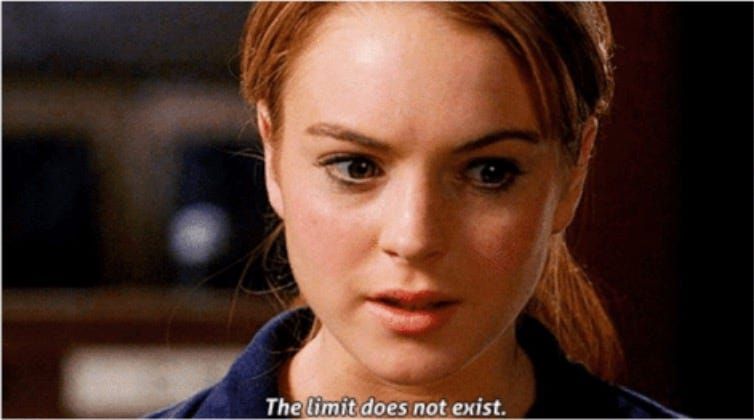
The Limit Does Not Exist
Maybe that’s the real problem with treating dating like a numbers game: no number tells you when to stop.
There is always another person to swipe on. Another date you could go on. Another profile that might be slightly funnier, slightly hotter, slightly more your type. You could keep counting forever and still convince yourself that the next number might be the one that finally adds up to love.
But maybe the goal isn't to get better at the numbers. Maybe it's to stop letting the numbers decide how you feel.
Go somewhere because you're interested in being there. Learn something because you want to know it. Say yes to dinner because you like the person you're having dinner with, not because you're trying to determine whether they could be your future spouse. Let yourself have conversations that don't go anywhere. Let some people remain strangers. Let some dates simply become funny stories.
You are not waiting to become a complete person when someone finally picks you. A relationship can add to your life, surprise you, challenge you, and make it more fun. It can be a wonderful thing. But it shouldn't be what makes your life feel like it counts.
So yes, technically, the limit does not exist.
Maybe there isn't a magic number of dates between you and the person you're supposed to meet. There probably never was. The point was never to get better at the numbers. It was to get better at knowing yourself.
And honestly, that sounds like a much better equation to me.
It’s about taking a beat when meeting someone feels different. And sure, that’s going to mean fewer matches, fewer dates, and fewer connections that go nowhere.
After all, I’m looking for a person, not a passing grade.