
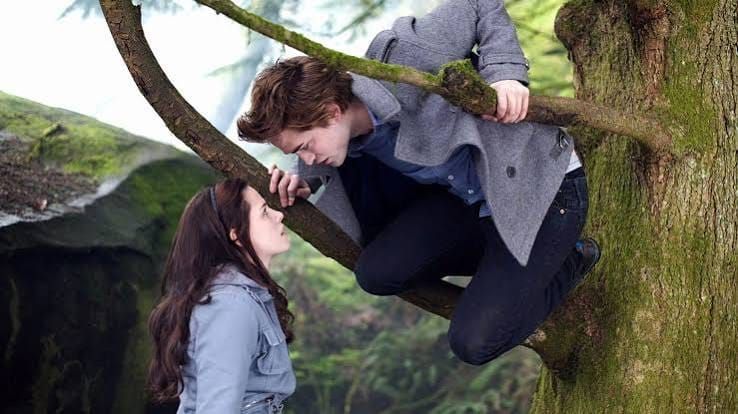
I want to preface this by saying I unironically love "Twilight."
I spent too many high school years pretending I hated it so I wouldn't look vapid and basic, even with a Team Jacob shirt shoved in the back of my dresser drawer. I even went to the lengths of ripping up my copy of "Eclipse" for an art project to prove I wasn't a fan (deeply regretting that now).
Now, I'm loud and proud about my love of "Twilight," while still allowing myself to critique it.
"Twilight" is truly a psychological study of what can happen to an emotionally neglected young woman: she loses herself in something beyond herself, be that substances or, in this case, a 117-year-old man. Yes, Edward Cullen is 117 years old despite being in a teenager's body.
Bella Swan's infatuation with Edward does not represent true love; it's actually a desire to escape her sad, boring life in rainy Forks, Washington. Her biggest fear is growing old, and being with the vampire Edward is an opportunity to evade that fate completely. If anything, Bella didn't love Edward; Bella loved what Edward represented to her—immortality and new life.
Of course, at 17 or 18 years old, we're not always making the best decisions for our futures if left to our own devices, so Bella choosing to marry Edward, a man she's known for barely a year at 18, and believing she has everything figured out, reveals her naivety.
Her father, Charlie, who wasn't the most involved parent, couldn't even pretend to know what was best for her, and he accepted Bella's choice without much of a fight. Her equally emotionally absent mother was also excited for Bella to latch onto someone new, much like herself with her new minor-league player husband.
Bella's flat affect and impenetrable mind were what piqued Edward's interest in her in the first place. Otherwise, he would have held her in contempt like any other human.
Of course, there are a variety of theories of what made Edward and Bella so irresistible to each other. In my own pessimistic mind, they both represented the unattainable to each other, which can signal classic anxious-avoidant attachment dynamics. Edward was fully ready to leave Bella to protect her, despite both of their feelings, and Bella's distress at Edward's abandonment revealed just how emotionally dysregulated she was.
Bella didn't need Edward; she needed a therapist.
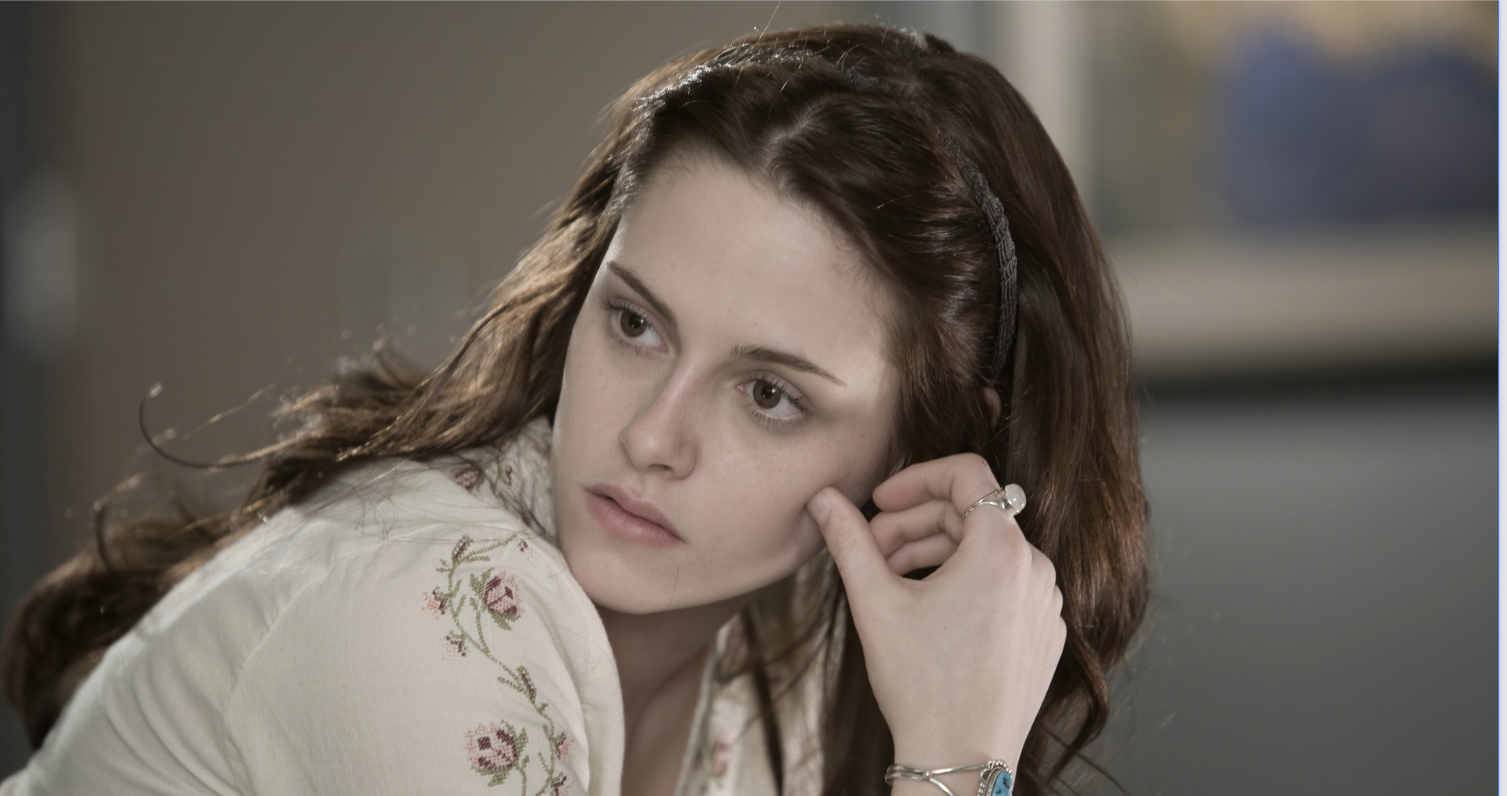
My Edward-bashing isn't to say that I'm Team Jacob. While I do think pre-werewolf Jacob would have been a beautiful romantic encounter for Bella, her mental state would likely not allow her to love Jacob as much as she could. Post-werewolf Jacob was manipulative and, at some points, downright abusive, and making Bella's daughter Renesmee the underlying catalyst for his attraction to Bella was Stephenie Meyer's final nail in the Team Jacob coffin.
Choosing between two equally hot supernatural guys sounds like a teenage girl's dream, making for bestselling YA literature and a box-office smash franchise, and it's exactly why I enjoyed it in the first place. I saw a lot of myself in Bella, seeking the excitement and deep emotional connection I didn't have at home. Her personality was just thin enough that readers and viewers across the world could find themselves in her.
As quickly as Twilight blew up in popularity, it also became en vogue to hate it. Rather than choosing Edward or Jacob, some readers chose "Team Tyler's Van," concluding that they'd rather see Bella die in a tragic accident than continue the story, as if Bella was the problem all along. Teenage me was also guilty of making that declaration in an attempt to deflect from my secret love of the series.
Now, rather than hating Bella, I empathize with her.
I see a young woman who had the potential to come into herself and discover who she is outside her unfortunate family situation, but a 117-year-old man had other plans.
On the surface, vampire Bella has the world at her feet: immortality, immense beauty, exorbitant money, and a new family that won't abandon her, and vice versa.
However, she can no longer bask in the sun, something she actually enjoyed prior to moving to Forks. She can no longer live a normal life. She had to leave her human friends behind and instead live a transient life of secrecy bound to her vampire family. She will outlive those she loved and could ever love, tied to her husband and maker.
Even human marriages aren't this suffocating.
On the other hand, even if she chose Jacob, Bella would potentially find herself in another patriarchal setup like Leah Clearwater and Emily Young, and most likely stuck in the town and life she no longer had interest in.
If I could rewrite "Twilight," Bella wouldn't have chosen Edward or Jacob. She could have been honest that she was using Edward for his dark gift of vampirism, disappearing into the mist of Forks, off to start her own adventure. She could still study and have a great career on her own, and live the ageless life of her dreams without the regret of choosing the right guy too soon.
Bella let a man's presence in her life ultimately dictate her future before she had a chance to understand the implications, and if she ever regretted it, it would be much too late.
As we're in a "Twilight" renaissance, I'm happy to see that more young women are realizing that Bella's life isn't aspirational (much like my other favorite fictional darling, Carrie Bradshaw).