

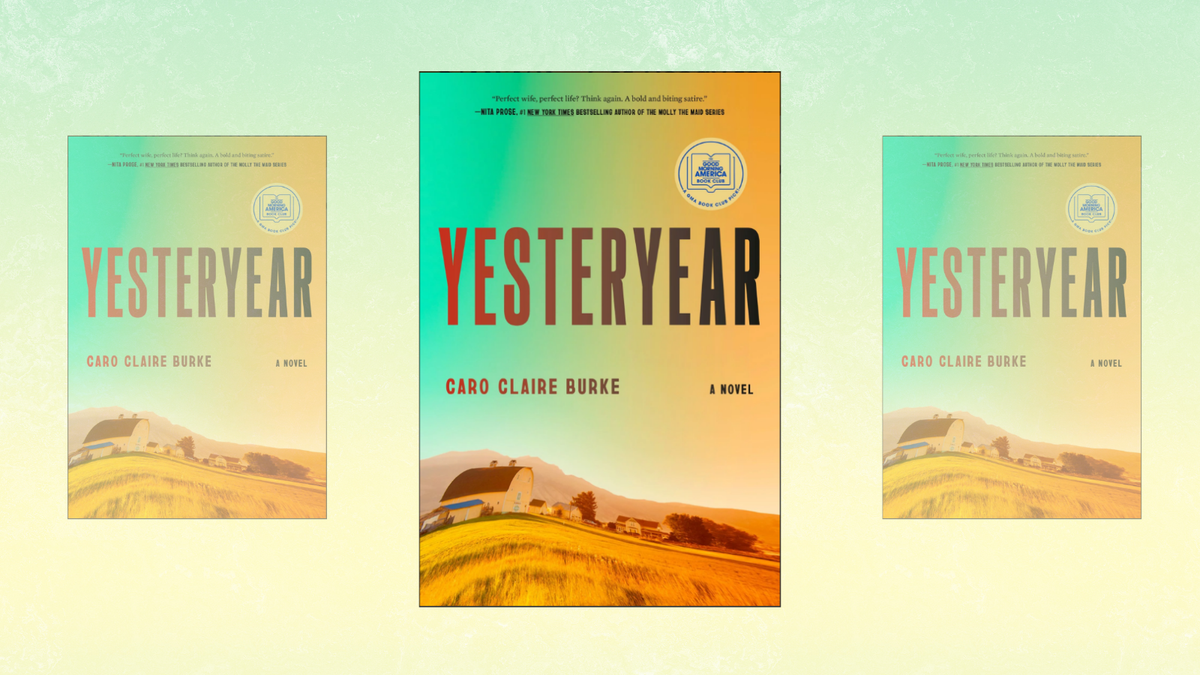
I picked up Yesteryear by Caro Claire Burke because it was one of the year’s most talked-about books. Here’s the gist: Natalie is a wildly successful tradwife influencer living in Idaho. Online, she has the perfect marriage, family, and home. Behind closed doors, she’s deeply unhappy.
Then Natalie wakes up in 1855 without any modern conveniences. She must survive on the frontier while caring for children who insist she’s their mother.
Is it a hoax? Did she unknowingly join a reality show? Is she mentally unwell? You’ll have to read it and decide for yourself.
I finished Yesteryear and decided I didn’t like it… or so I thought. Because months later, I’m still talking about it.
What’s a Tradwife?
A tradwife, or traditional wife, embraces old-fashioned gender roles: she stays home to cook, clean, raise the children, and care for her husband while he earns the money. Think of the picture-perfect housewives portrayed in 1950s family sitcoms.
On social media, tradwives spend their days baking bread from their homemade sourdough starter, cooking every meal from scratch, maintaining spotless homes, growing organic gardens, and homeschooling happy children, all while looking beautifully put together.
They also make the rest of us feel guilty about not being better moms.
Why We Hate to Love Tradwives
Being a stay-at-home mom isn’t the same as being a tradwife. Many women choose to stay home without defining themselves by outdated expectations about what wives and mothers should be. The difference is important.
When my children were little, I wanted to be a stay-at-home mom. Cooking, cleaning, and spending my days with my kids sounded pretty good. I was lucky enough to do it… and then I got bored.
Luckily, mommy blogs and social media were taking off, and online magazines needed writers. I was in the right place at the right time, which allowed me to work from home around my family’s schedule.
Tradwife influencers make staying home look effortless. Their children never make messes, dinner is always homemade, there are no dishes in the sink, and these perfect moms never lose their minds over the mountain of laundry that regenerates overnight because, apparently, they don’t have one.
But let’s not forget that we only get to see what they want us to see.
And maybe that’s why we can’t look away. The lives they present are an escape from our careers, bills, packed schedules, and the exhausting expectation that women should be able to juggle it all. We’re drawn to their simplicity, even when we know it’s a carefully curated version of their lives. It’s beautiful, soothing, and completely unrealistic.
What Yesteryear Left Me Thinking About
Yesteryear takes that perfectly packaged fantasy and drops it into a time when being a traditional wife wasn’t an aesthetic; it was survival. Women didn’t churn butter because it looked charming in a reel. They did it because their families needed to eat.
Maybe that’s why the book has stayed with me even though I didn’t enjoy it. It made me think about how easily restriction can be sold as simplicity and how appealing that looks when everyday life feels overwhelming.
I still can’t decide whether I liked Yesteryear. But any book that has me thinking about it months later probably accomplished exactly what it set out to do.