
I have spent a surprising amount of my adult life deciding I should probably have a hobby, then immediately making it more complicated than it needs to be.
Learn a language? Great. Surely I should eventually be fluent.
Take up roller skating? Obviously I should learn how to do tricks.
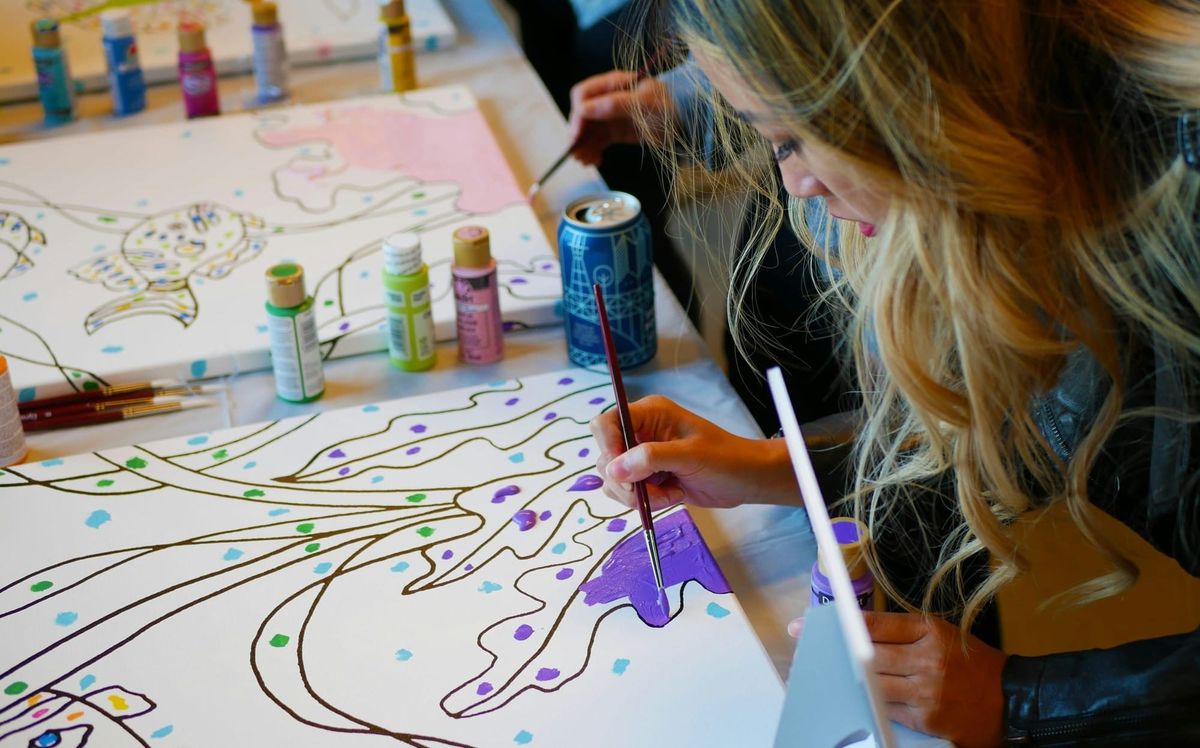
Paint? Maybe I could actually get good at painting.
This is how hobbies sneakily become self-improvement projects. We start doing something because it sounds fun, and somewhere between buying the supplies and watching three YouTube tutorials, we have decided there should be an outcome.
I have recently become very interested in the radical concept of doing things simply because I like them.
Not because they make me smarter. Not because I can eventually monetize them. Not because I can post a beautiful picture of the finished product and make everyone think I have a very curated life.
Just because I enjoy doing them, and, as it turns out, I am particularly good at enjoying things I am very bad at.
You Don’t Have To Be Good At It
My favorite example is Bob Ross water coloring.
I love Bob Ross. I love the calm voice, the happy little trees, the whole premise that you can apparently make an entire beautiful landscape in 30 minutes while remaining emotionally regulated. So naturally, I decided I wanted to try water coloring along with him.
One small issue: I am terrible at it.
My paintings do not look like Bob Ross paintings. They look like Bob Ross stopped by my house, looked at what I was doing, and quietly decided not to get involved.
The trees are questionable. The mountains are questionable. The sky is often questionable. There is usually a point where I look at the paper and think, Well, this certainly is a landscape.
And then I keep going.
That is the part I like. There is something surprisingly freeing about doing something when you already know you won't be particularly good at it. I am not sitting there thinking about whether this painting could become a side hustle or whether I am progressing at an acceptable rate. I am just sitting there, painting a very bad little tree, and somehow I know that Bob is proud.
Learning French Is Still A Hobby
Learning French through Preply has also been objectively useful. Learning another language is one of those hobbies that comes with built-in approval from basically everyone. Tell someone you’re learning French, and they immediately understand it's a Good Thing. It’s intellectually stimulating, potentially beneficial for long-term brain health, and often associated with delaying the onset of dementia symptoms.
At the very least, it gives your brain something to do besides replaying embarrassing conversations from 2014.
But I have also caught myself doing the thing where I start thinking about what I should be accomplishing. How quickly should I be progressing? How many words should I know? Should I be practicing every day? At what point will I be able to casually switch into French at a dinner party and impress everyone?
Meanwhile, sometimes I am just sitting there trying to remember the difference between two words that apparently sound the same to me.
The nice thing about learning French is that it can be useful without becoming a productivity project. I don't need to turn it into a five-year plan. I don't need to reach some imaginary finish line before I can call it a hobby.
Roller Skating Is A Humbling Experience
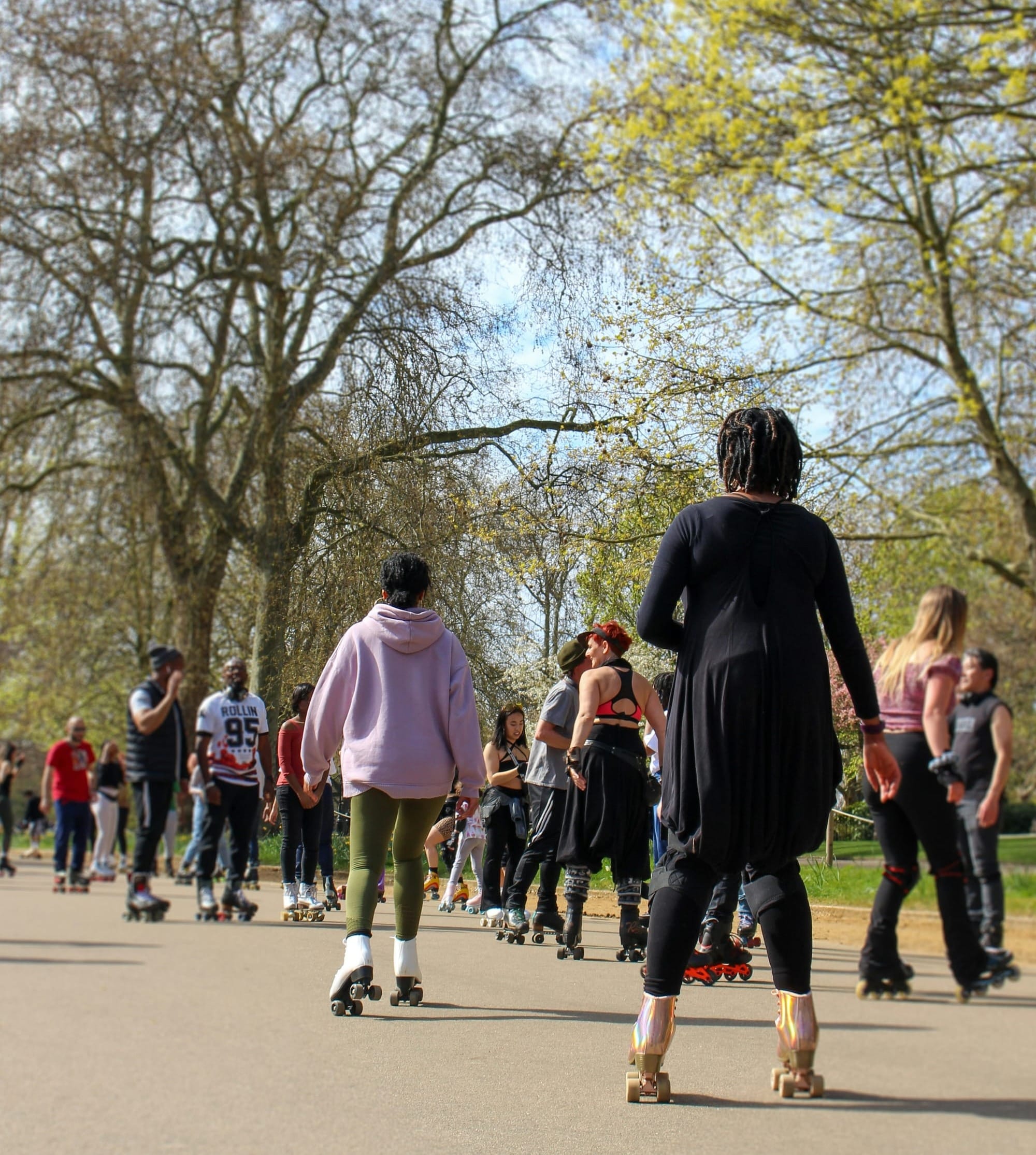
Roller skating has been another reminder that being an adult beginner is a very specific kind of vulnerable.
As a kid, you can be terrible at something without really thinking about it. You fall, you get back up, and then you fall again. Nobody expects a nine-year-old to have a five-year strategic plan for roller skating.
As an adult, everything feels a little more consequential.
You put on the skates, and suddenly you are extremely aware of your knees. You realize there are muscles involved in balancing that you have apparently never met before. You spend a lot of time moving much more slowly than the people around you while trying to look like you absolutely meant to.
But I really like being a beginner at roller skating. It gets me out of my head.
You can't multitask while you are trying not to fall over. You are thinking about your feet, your balance, where you are going, and whether that slightly uneven patch of pavement is about to ruin your afternoon.
For an hour, the only thing you have to do is skate.
Apparently, Changing Your Wheels Is Also A Hobby
The funniest thing about picking up a hobby is discovering how quickly it can create other hobbies.
I started roller skating. Then, at some point, I realized I needed to know how to change my wheels. Suddenly I was watching tutorials about wheels, bearings, tools, and other terminology I had never considered important in my life. I was learning how to take things apart and put them back together without losing a tiny piece that would apparently be very difficult to find again.
Nobody asked me to learn this. There was no career benefit. Nobody was going to be impressed that I could change roller-skate wheels. I just wanted to understand my skates better.
And that is actually one of my favorite things about hobbies. They can lead you down weird little rabbit holes that you never would have planned for yourself.
You start painting, and suddenly you have opinions about brushes.
You start skating, and suddenly you know what bearings are.
You start learning French, and suddenly you have spent 20 minutes researching why a sentence is structured the way it is.
Not every rabbit hole needs to lead somewhere.
The Internet Wants Your Hobby To Become A Personality
I think part of the problem is that the internet has made hobbies look incredibly polished. There is always someone making perfect pottery in a perfectly decorated studio. Someone learning to play guitar who already looks cool doing it. Someone baking a loaf of bread that belongs in a magazine. Someone who picked up tennis three months ago and now has the outfit, the bag, the water bottle, and the extremely convincing backhand.
Even hobbies have branding now. Every interest has a version with a whole lifestyle attached.
If you like running, you need the shoes and the watch and the matching set.
If you like painting, you need the beautiful little studio.
If you like cooking, suddenly you are supposed to be making your own pasta from scratch on a Tuesday night.
And there is nothing wrong with any of that. If buying beautiful supplies makes you happy, buy them.
But sometimes I think we have forgotten that a hobby can also be deeply unremarkable. You can make something nobody ever sees; the internet does not need to know.
Not Everything Needs To Be Productive
We are very good at turning our free time into work. We exercise because it is good for our health, read because we should be reading more, and cook because eating out is expensive. We learn skills because they might be useful someday.
Even our relaxing activities can come with an invisible scoreboard.
How often are you doing it? Are you improving? Are you challenging yourself? Are you getting enough out of it?
At some point, I think you are allowed to do something simply because it makes Tuesday night a little more enjoyable.
That might be painting. It might be baking. It might be tennis, knitting, dancing, gardening, playing an instrument, doing crossword puzzles, or learning how to make an unnecessarily complicated cocktail.
It does not have to make you healthier, richer, smarter, more interesting, or more employable. If it makes you happy, it is doing its job.
Being Bad at Something Is Actually Kind of Nice
There is also something oddly comforting about having an activity where you are not the expert.
Most of adulthood is spent being expected to know things. You have passwords to remember, appointments to make, emails to answer, bills to pay, groceries to buy, and approximately 700 tabs open in your brain at all times.
Being bad at something permits you to be curious instead of competent. You can ask dumb questions. You can mess up. You can watch a tutorial three times. You can try something, hate the result, and try again without deciding that you are bad at everything.
I think we underestimate how useful that feeling can be because there is a particular joy in remembering that you are allowed to be a beginner.
You enjoyed it. That was the point.
Let Yourself Have Something That Goes Nowhere
There is a strange freedom in doing something with no obvious destination. We are so accustomed to asking where something is going. Is this relationship going somewhere? Is this job going somewhere? Is this degree going somewhere? Is this project going somewhere?
A hobby can simply sit there and be a hobby. It can exist in the corner of your life without asking for a five-year plan.
That is probably why I keep coming back to water coloring. I know I am not secretly on my way to becoming the next great landscape painter. There is no dramatic reveal coming where Bob Ross's spirit descends from the heavens and says, You've got it.
I am just going to keep making questionable little paintings, and honestly, I hope I do.
Because there is something really lovely about having a part of your life where the goal is not to get better, make money, impress anyone, or become someone new.
Sometimes the goal is just to sit down, put on Bob Ross, make a very bad mountain, and enjoy yourself. Maybe that is what a hobby is supposed to be: not another thing to optimize or accomplish.
Just something that belongs to you because you like it.